
Best Ways to Trap an Armadillo
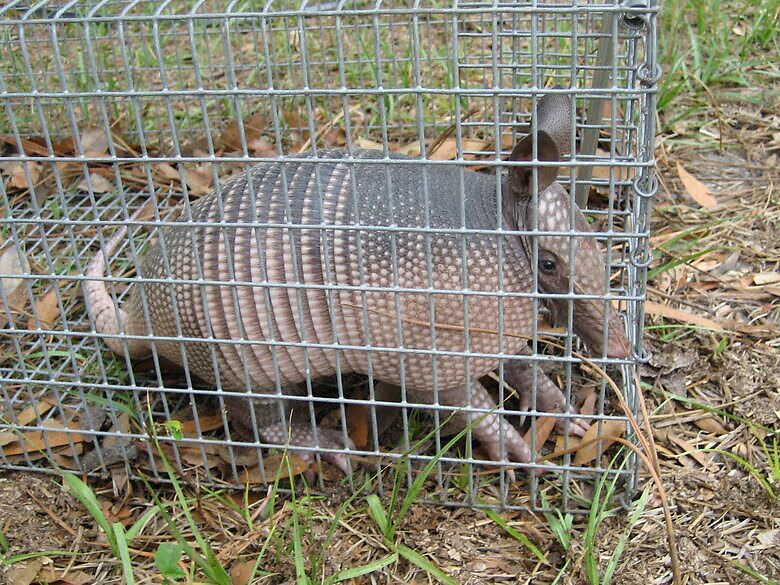
Know Your Foe
The armadillo is a nocturnal creature, so seeing one in the day is possible, but rare. Seeing an armadillo is obviously the best way to know that you’re dealing with one; however, that isn’t always possible.
There are a few tell-tale signs that point toward dealing with armadillos. These signs include the track marks and lots of small burrow holes in the ground as the armadillo looks for a meal in the night.
- The tracks left by armadillos are three toe prints. Very often, you can see a claw impression left at the end of these toes.
- Oftentimes, a large burrow can be seen where the armadillo retreats to during the daytime.
Trapping
One of the best ways to eliminate an armadillo problem is by trapping them using a live animal trap.
Armadillos are habitual creatures and will follow certain pathways every time they leave their burrow. Once you have identified these pathways, they can be used to your advantage, and you can know exactly where to set the trap.
- Choosing the Trap – The trap should be around 12 by 10 by 30. While looking at the trap, imagine if an opossum, large cat, or small dog would fit inside without being constricted in a manner that could be harmful.
- Choosing the Bait – Next, you need to consider bait. An armadillo has poor eyesight, but isn’t foolish and won’t willingly walk into a trap. The best baits have been shown to be made from high-value foods for the armadillo. This can be opened fruit, worms, or even live fishing bait. Armadillos do have a natural instinct that encourages them to work for food, so find some way of concealing the bait within the trap that will make the armadillo work for their meal. Note that you can still try to trap without a bait.
- Setting the Trap – If you have identified a burrow, then fill up all but two burrow holes. Set the trap at one end and then harass the armadillo out of the other side and into the waiting trap. An armadillo will typically have one single nesting burrow and several smaller escape burrows.
- Increasing the Odds – To increase your odds of trapping the animal, use long boards on each side of the live animal trap to funnel the animal inside. If your trap is slightly out of place the boards will guide the armadillo into the trap.
Make sure that you are checking your traps regularly to ensure that you deal with the trapped animal as quickly as possible.
After Trapping
Firstly, check that it is the problem armadillo that you have caught and not some unsuspecting animal or the neighbor’s cat. If you have trapped something else and you’re unsure what to do, contact your local wildlife authority and they can advise if it can be released, needs to be collected by professionals, or needs to be euthanized.
If you have successfully caught the armadillo then you need to
- Put the trap somewhere safe. The trunk of your car with a plastic sheet underneath or on the bed of your trunk usually works best.
- Check with your local wildlife authority about where you can release the armadillo, or if it needs to be euthanized (your local authority can do this for you).
- If you are able to release the animal, then make sure that you are driving at least five miles away from your home. Also, don’t release it into an urban area and turn your problem into someone else’s. Ensure that the area is suitable for an armadillo to be released, as this will prevent the animal returning to someone’s yard. Suitable places normally include wooded areas that are close to a water source.
Remember, if you have any doubts, contact your local wildlife services and they will be able to relocate the critter, although this will often carry a cost.